
Permission follows the staff role
The assigned staff role determines what Galileo can view and change. Updating that role’s Galileo permissions changes access for everyone assigned to the role.
AI receptionist for HVAC
Set up a phone workflow with a clear Galileo role, allowed commands, and an on-call handoff so the office can continue from the same customer record.
Follow the work
A homeowner calls about a no-cool issue during a heat wave. Galileo can follow the configured phone workflow, collect the service details, use the allowed booking path, and hand off urgent or uncertain situations to the on-call team with the conversation context retained. Set the customer-facing commands and the point where Galileo should hand the conversation to the dispatcher or on-call HVAC team. The office can pick up the record with the caller’s context instead of reconstructing a conversation from a separate answering service.
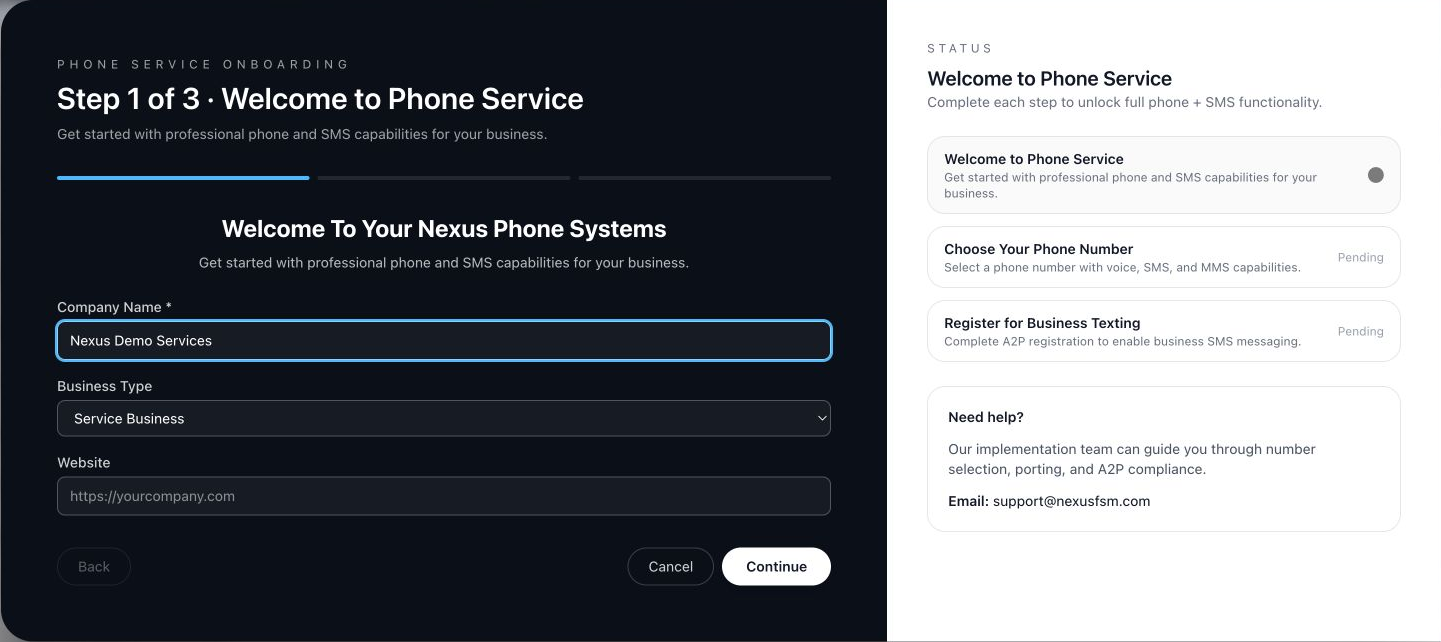
The phone foundation
Prepare the business information, number selection, and business-texting registration that support the voice workflow.
Walk through it with usThe handoff
The assistant settings show a specific emergency handoff destination and after-hours message for the office to review before enabling customer conversations.
Walk through it with us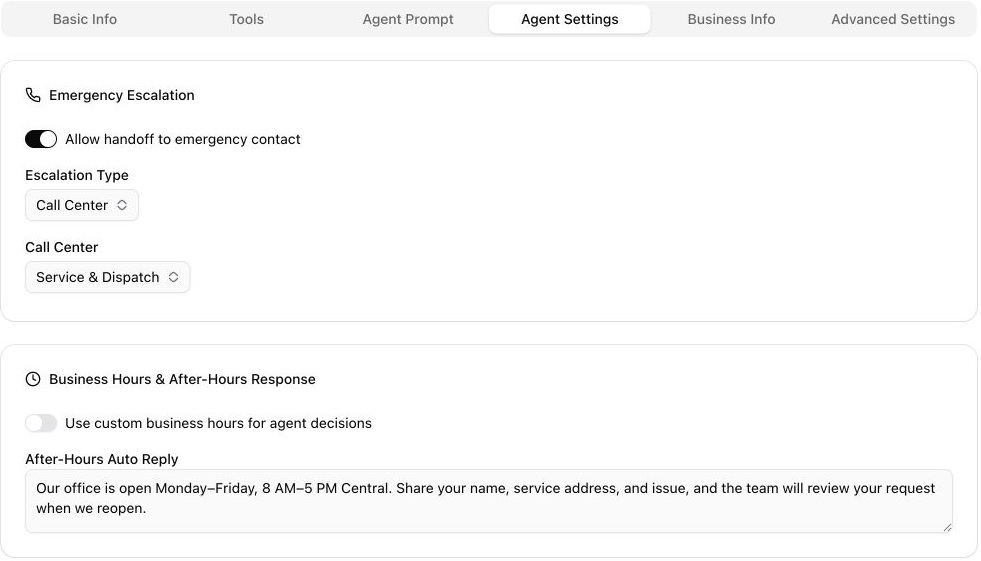
Ask from the field
Ask about the business while you are away from a desk. The Nexus mobile app brings Galileo into the same place the team uses for field work, with a conversation that starts from the question you actually need answered.
Here, the request is simple: which unsold estimates have the highest value right now? That is a practical starting point for deciding where to focus follow-up. It gives Galileo a clear record type, a status to consider, and a way to prioritize the response.
This screen captures the question while the answer is still being prepared. Continue the conversation to review the returned estimates and ask for more detail before deciding what to do next. Staff access and the configured approval policy still govern the work Galileo can help carry out.
See this workflow in Nexus
The command boundary
The assigned role and approval policy keep booking, updates, and handoffs within the boundary the operation has chosen.
Walk through it with us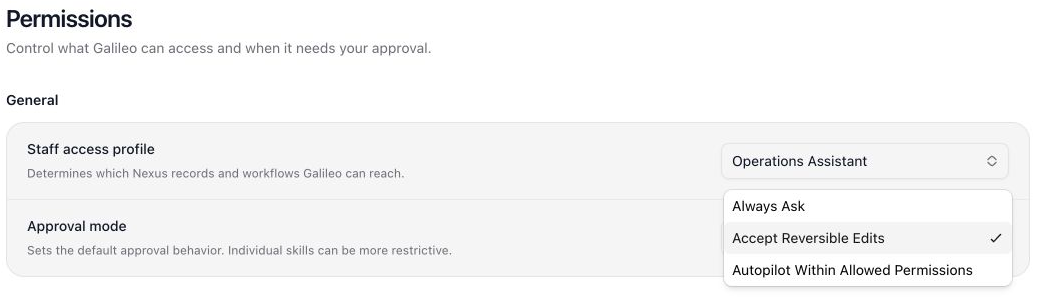
Galileo on mobile
Open estimates deserve attention even when you are away from the office. Ask Galileo which unsold estimates have the highest value, then review the answer from the Nexus mobile app before deciding which customer conversation should happen next.
In this demo, Leo returns five unsold estimates totaling $12,455. The response lists the estimate references and customers, explains the open pipeline, and separates sold or dismissed work from the opportunities still being considered. That context makes the list more useful than a single total.
Use the answer to choose the records to review with the team. Check the scope and the next follow-up before contacting the customer. Galileo brings the information into the conversation while your staff keeps the final decision in hand.
See this workflow in Nexus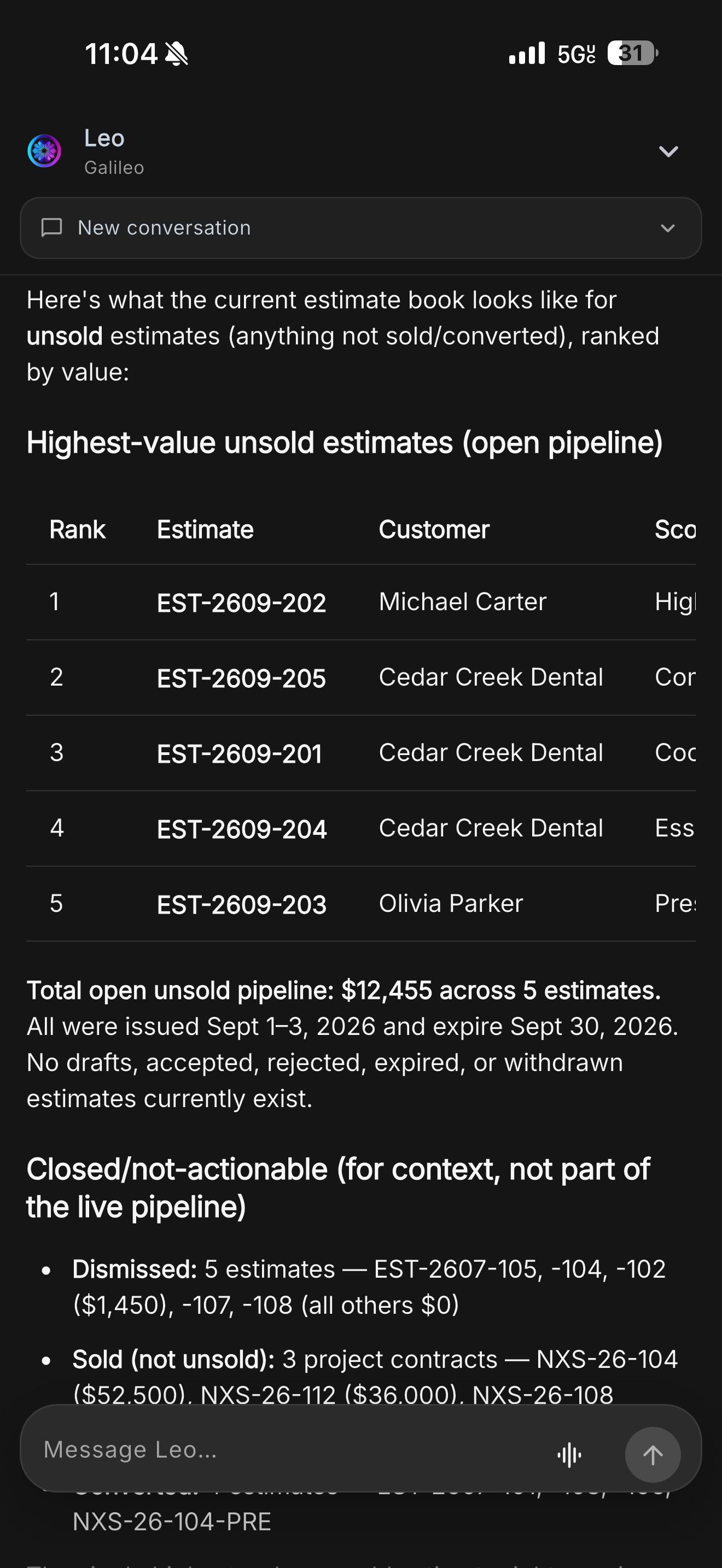
Take a closer look
How can an AI receptionist help a HVAC office handle calls without losing job context?
Set up the Nexus phone workspace, define the Galileo role, and choose the commands and handoff path that fit your HVAC operation. Galileo can support an after-hours or overflow receptionist workflow using the same customer, schedule, and job context the office already has.
Can AI do useful work in Nexus while I control what it can change?
Galileo works with Nexus records using the staff-role permissions you assign. Choose how it asks for approval, give it a specific task, and follow the proposed actions and completed work in its workspace.
Choose the Nexus staff role Galileo will use. Select the business areas and actions it can access, such as reading job information, adding a note, or changing an appointment.
Select Always Ask, Accept Reversible Edits, or Autopilot Within Allowed Permissions. The policy changes how eligible actions are approved; it does not remove the boundaries of the selected role.
Identify the customer, job, appointment, or document and describe the outcome. For example, ask Galileo to create an estimate, reschedule an appointment, update invoice details, or add a job note.
If Galileo needs more information, respond in the task conversation. Confirm which record or schedule change you mean rather than asking it to guess between similar customers or jobs.
The approval card explains why confirmation is needed and shows the proposed command with its available details. Approve it to continue or deny it when the proposed change is not what you intended.
Use Work to inspect plans, pending approvals, and completed actions. Open the task conversation when you need to clarify, correct, or stop the request. The activity remains available for the staff member reviewing the result.
Ask Galileo to turn a repeated procedure into a skill. Review its instructions, allowed tools, and manual, event, or scheduled trigger. Activate the reviewed skill when ready, run it when needed, and pause it when the process should stop.
For scheduled skills, review the next run and time zone and edit supported daily, weekday, or weekly timing. The Rules area shows proposed operating choices and their scope; confirm a rule, disable it, or ask Galileo to revise it before relying on that choice again.
The assigned staff role determines what Galileo can view and change. Updating that role’s Galileo permissions changes access for everyone assigned to the role.
The approval card shows the reason confirmation is needed and the proposed action details. Approve the action to continue or deny it and explain the change you want.
Autopilot uses the actions allowed by the assigned role. Payments, refunds, credentials, and tenant administration remain outside Galileo’s access.
Open a Galileo conversation and start voice when the account supports it. Allow microphone access, speak the request, and continue clarifications or corrections in that thread. Voice can submit or steer a task, while the same permission and approval controls govern the actual Nexus actions.
A few more answers
Get clear on the steps, the customer’s view, and the setup your team will need.
Only configure booking where the availability, scope, and approval policy make sense. Use the command catalog and staff role to set the allowed actions, and hand off uncertain or protected work to the dispatcher or on-call HVAC team.
Yes. Configure the phone workspace, business information, number selection, and required business-texting registration before connecting a number and configuring the answering workflow.
The goal is to keep the conversation connected to the customer and operational record so the next person can review the context before they act.
Galileo can work with the Nexus records and commands allowed by its assigned staff role. It can also surface information and propose the next action. The configured role and approval policy determine what can proceed.
You choose the approval policy and the role permissions. Reviewed skills can run manually, from supported events, or on a schedule when the account has the needed autonomy access and usage allowance. Payments, refunds, credentials, and tenant administration remain outside Galileo access.
Yes. Always Ask is one available policy. Other modes allow reversible work or eligible actions within the assigned permissions, depending on the configuration.
An appointment action can change its date, times, arrival window, technicians, or duration, with the parent job schedule kept in step. Staff access and the selected approval mode determine which actions can run.
It can create jobs and estimates and add notes, as well as help interpret records. The selected staff role determines which actions it can use.
Your team. Your workflow.
Bring a job your team knows well. We’ll walk through the scheduling, field work, documents, and billing that matter to your business.